

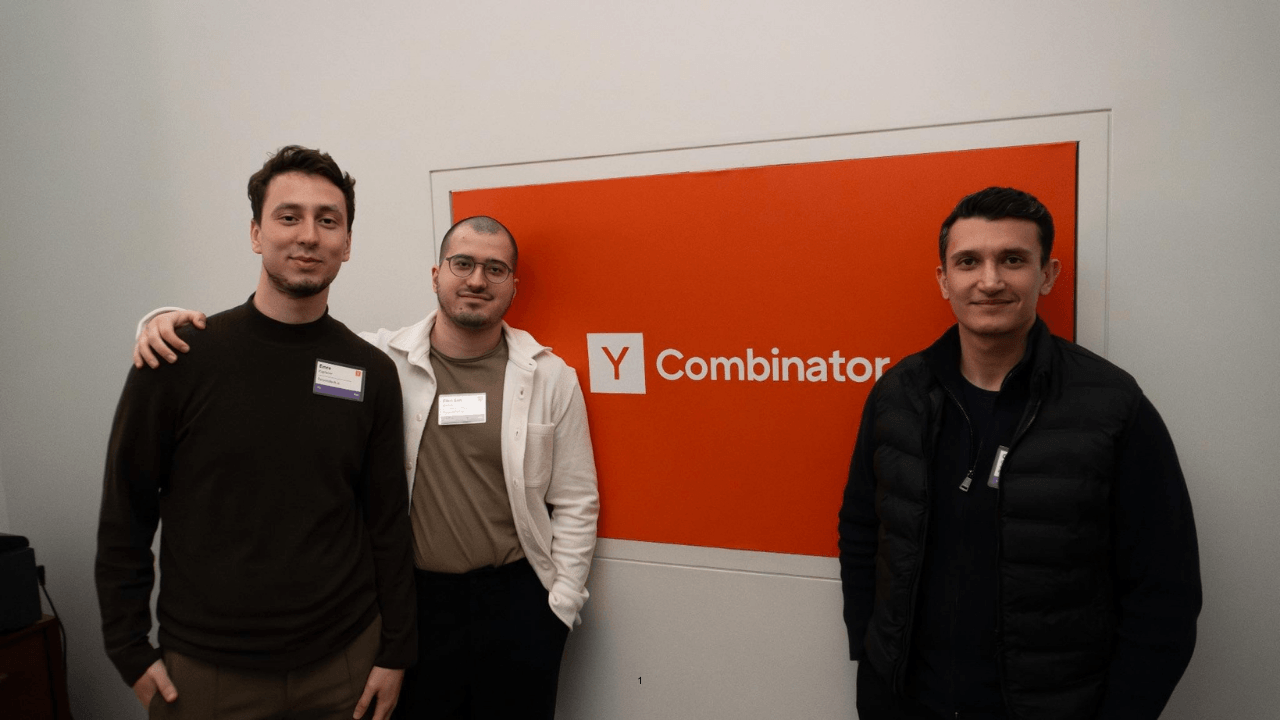
US-based healthtech startup Patientdesk.ai has secured $1 million in pre-seed funding in a round led by Y Combinator, with participation from E2VC.
Founded by Emre Kaplaner, Öncel Özgül, and Fikri Şan Köktaş, Patientdesk.ai is building voice AI-powered solutions to automate patient intake processes for healthcare clinics. The company plans to use the new funding to accelerate product development and expand its international integrations. As part of its growth roadmap, Patientdesk.ai is also preparing to open a Seed round in the near future.
Y Combinator is known for backing global technology leaders such as Airbnb, Uber, and Stripe at early stages — making its support a notable milestone for the startup.
Automating Patient Intake with Voice AI
Patientdesk.ai focuses primarily on dental clinics and other healthcare providers, offering an end-to-end voice AI system that automates:
- Incoming call responses
- Appointment scheduling
- Patient data collection
- Automatic transfer of patient information into clinic management systems
By digitizing and automating these processes, the company aims to reduce administrative burden while improving operational efficiency for clinics.
Strong US Market Positioning
Patientdesk.ai integrates directly with widely used clinic management software platforms across the United States, Australia, and the United Kingdom. Notably, the startup offers a real-time insurance verification capability during calls in the US market — a feature that strengthens its competitive positioning.
Currently working with more than 60 clinics, the US-based startup is actively expanding through strategic partnerships. In this context, Patientdesk.ai is collaborating with CorePractice, one of the popular clinic management systems in its segment.
The company also confirmed that it has established strategic partnerships with two major global healthtech firms, although the names of these partners remain undisclosed for now.
With voice AI increasingly transforming healthcare operations, Patientdesk.ai is positioning itself as a scalable infrastructure layer for next-generation clinic automation.
