

As food security and climate resilience climb higher on the GCC’s strategic agenda, agri-technology companies are increasingly evaluated not on experimentation, but on their ability to commercialize, scale, and regionalize.
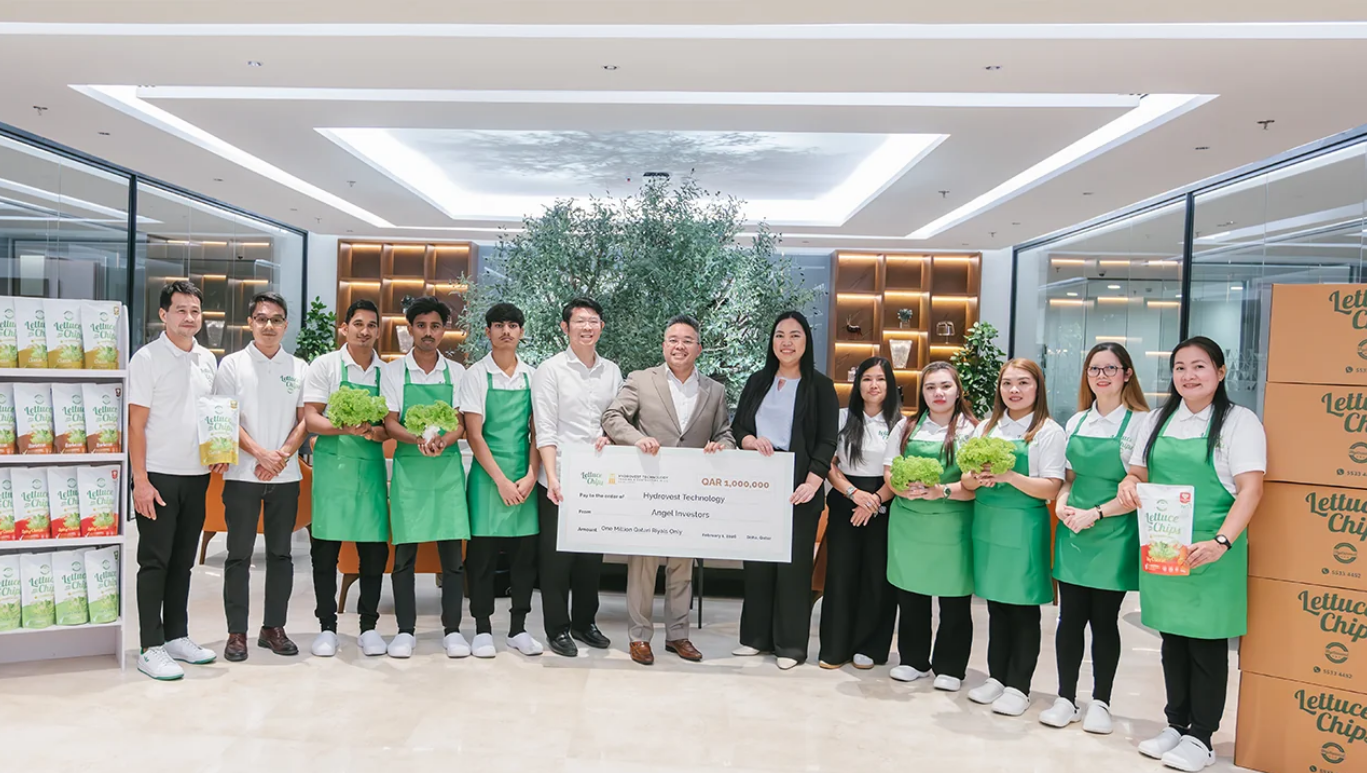
That shift helps explain why Hydrovest Technology, a Doha-based climate-smart agriculture company, has secured approximately $275,000 (QAR 1 million) in fresh funding. The capital will be used to scale production, broaden its product portfolio, and prepare for regional expansion beyond Qatar.
From Pilot Projects to Commercial Scale
The investment marks a pivotal transition for Hydrovest as it moves from pilot deployments toward repeatable, commercial-scale operations. The company plans to allocate the funds toward expanding production capacity, completing a new factory fit-out in Birkat Al Awamar in Al Wakrah, and accelerating research and development across new product lines.
For agri-tech companies operating in arid and climate-challenged regions, this phase is often the most difficult. Scaling requires not just capital, but operational rigor—supply-chain reliability, automation, quality control, and consistent market demand. Hydrovest’s latest round signals growing confidence that climate-smart agriculture in Qatar is beginning to move beyond proof-of-concept and into execution.
Building Value Beyond Fresh Produce
Rather than limiting itself to crop production, Hydrovest has strategically positioned its business around value-added food products. The company is best known locally for Lettuce Chips, a premium snack produced from hydroponically grown lettuce. It is now preparing to expand into freeze-dried fruits and wellness-oriented beverages, including lettuce-based tea blends.
This diversification reflects a broader trend across agri-tech globally: margins and defensibility increasingly come from processing, branding, and distribution—not raw produce alone. Value-added products also mitigate spoilage risk, stabilize pricing, and open access to retail and export channels.
Technology as a Core Differentiator
At the heart of Hydrovest’s model is data-driven cultivation and automation. The company has established a strategic technology collaboration with DENSO to support precision farming and enable the cultivation of high-value crops—such as Japanese melons—under Qatar’s challenging climate conditions.
Beyond food products, Hydrovest is also preparing to commercialize its technology stack. Plans include the launch of AI-powered hydroponic solutions delivered through do-it-yourself and managed farming kits, extending its platform to customers, partners, and institutional users.
Preparing for Regional Expansion
A portion of the funding will support Hydrovest’s planned market entry into Dubai in the fourth quarter of 2026. The UAE offers a natural next step for export-ready agri-food companies, with established premium retail channels, advanced logistics infrastructure, and rising demand for locally sourced, sustainability-driven products.
Hydrovest has also received approval to be listed in the Qatar Development Bank Exporter Directory, signaling readiness to engage in cross-border trade and institutional partnerships.
The Bigger Picture
While $275,000 is modest by global venture standards, the round reflects a broader trend across the GCC: capital is increasingly flowing toward scalable, climate-aligned food systems that integrate technology, processing, and regional distribution.
For Hydrovest, the funding provides the runway to industrialize operations, de-risk new product launches, and reposition itself as a regional agri-tech operator rather than a local experiment. For the wider ecosystem, it underscores how food security, sustainability, and commercialization are beginning to converge across the Gulf.
