

Central Asia is accelerating its artificial intelligence ambitions, with Uzbekistan and Kazakhstan rolling out new initiatives aimed at embedding AI across business, public services, research and education.
Uzbekistan is preparing a major support programme designed to encourage thousands of companies to adopt AI, while Kazakhstan is strengthening its talent and research infrastructure with a dedicated AI-focused university.
Uzbekistan launches $100 million AI programme for businesses
Uzbekistan is set to launch the “AI Partner for 10,000 Enterprises” programme, allocating at least $100 million in its first phase to support businesses implementing artificial intelligence technologies.
Under the initiative, participating companies will be eligible for compensation covering 50% of the cost of AI implementation.
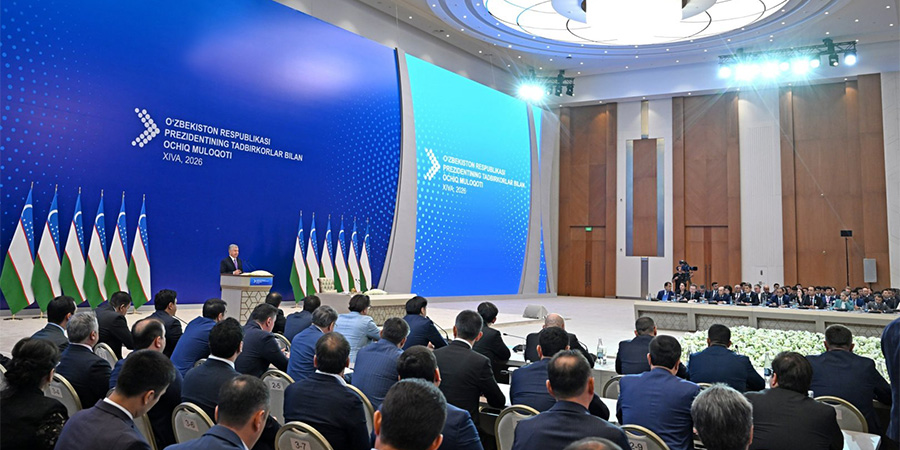
The programme was announced following an open dialogue between President Shavkat Mirziyoyev and Uzbekistan’s business community in the Khorezm region.
Government data presented by Mirziyoyev suggests that companies already adopting modern management practices and AI are seeing measurable results. Around 54% of businesses using these approaches reported a significant increase in demand, while 25% reduced production costs. Higher revenues also allowed 40% of the companies to increase employee salaries by more than 10%.
Uzbekistan is simultaneously investing in the computing infrastructure needed to support domestic AI development.
The country has launched its first supercomputer cluster at the Center for Digital Government Project Management, with computing capacity expected to triple next year.
Companies developing AI models for new products will be able to access the infrastructure free of charge, while eligible research and development expenses will be supported through the state budget.
The government also plans to introduce an open platform offering ready-to-use AI software, making it easier for companies to integrate AI tools without developing their own systems from the ground up.
Uzbekistan intends to expand automation initiatives already introduced in the textile industry into sectors including electrical engineering, construction materials and food processing. Companies in these industries will also be eligible for compensation covering half of the cost of implementing automated management systems.
AI moves into Uzbekistan’s public services
The country is also extending AI adoption into government services through a new cooperation project with South Korea.
Uzbekistan’s Ministry of Digital Technologies, South Korea’s National Information Society Agency (NIA) and UZINFOCOM have signed an agreement for a grant-backed project aimed at upgrading Uzbekistan’s citizen appeals system using artificial intelligence.
The partners plan to develop AI-powered tools capable of analysing and managing requests submitted to government agencies, alongside a feasibility study for a pilot deployment.
The project is expected to help public institutions process citizen requests more efficiently and forms part of wider cooperation between Uzbekistan and South Korea around digital government and AI technologies.
Kazakhstan builds dedicated AI research university
Neighbouring Kazakhstan is taking a different but complementary approach, focusing on the talent and research infrastructure needed for longer-term AI development.
The country is establishing Qazaq AI Research University, a specialised institution dedicated to artificial intelligence and designed to operate under an AI-Enabled University model.
The initiative is being developed under instructions from President Kassym-Jomart Tokayev, according to Rostislav Konyashkin, First Vice Minister of Artificial Intelligence and Digital Development.
The university will follow an AI+X model, integrating artificial intelligence with different academic and professional disciplines. Rather than treating AI solely as a standalone technical subject, students will study both the technology and its practical applications within their respective fields.
Qazaq AI Research University is also developing international partnerships with specialised institutions and universities in China, the UAE and Finland. Plans include an international AI learning platform designed to expand educational programmes and attract students from outside Kazakhstan.
The initiatives in Uzbekistan and Kazakhstan highlight a broader shift in Central Asia’s technology strategy. AI is increasingly being treated not simply as an emerging technology sector, but as infrastructure for improving industrial productivity, government services and workforce capabilities.
With public funding, computing infrastructure and specialised education programmes beginning to develop in parallel, the region is laying the foundations for wider commercial and institutional adoption of artificial intelligence.
Source: Telecom Review Asia, “Central Asia Steps Up AI Push Across Business, Government, and Education,” published August 20, 2026.
